

STEP 01
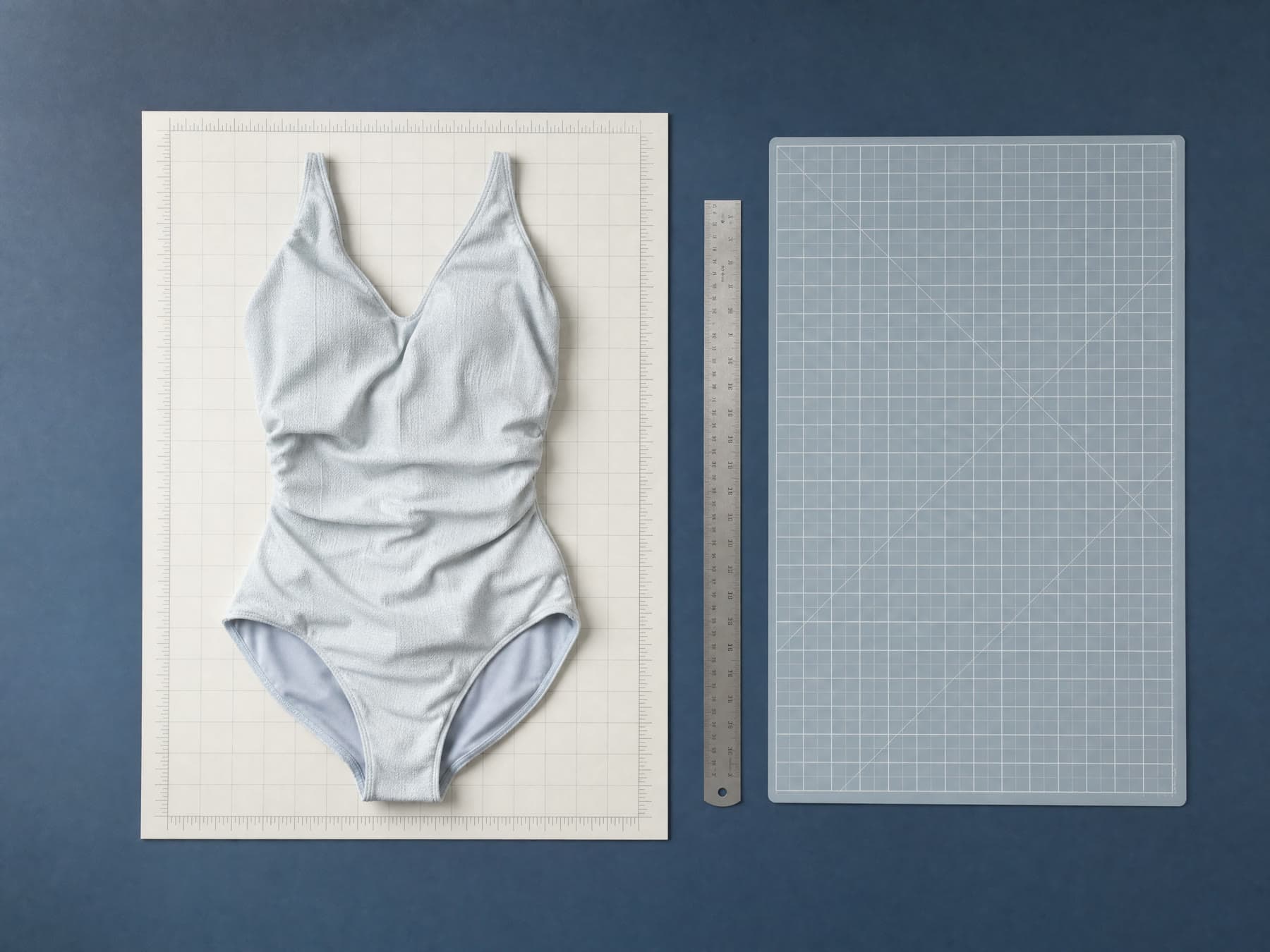
Lay it flat, photograph it from above
One garment, flat, nobody in it. Straps straightened, no folds hiding the panels. A phone on a table does this well enough.
01 — The question
MINUTE 06 / 30 AFTER LEAVING THE WATER
OPACITY 58–76% RANGE, NOT A MEASUREMENT
Drag the line, or use the arrow keys, to move through the first thirty minutes. Select a marked zone to enlarge what the fabric is doing there.
Swimwear is bought dry and used wet, and no product page has ever shown you the second state. Photograph the garment flat. We read the fabric and show you how opaque it stays once it is soaked, where it is most likely to go sheer, and how long it takes to come back.
Garments only. No bodies, no models, no photos of you — ever. The comparison on the right needs no account. Drag it, or use the arrow keys.
02 — What you do
The input is a garment on a flat surface. That is the only input there is, and it is the only one there will be.
STEP 01
One garment, flat, nobody in it. Straps straightened, no folds hiding the panels. A phone on a table does this well enough.
STEP 02
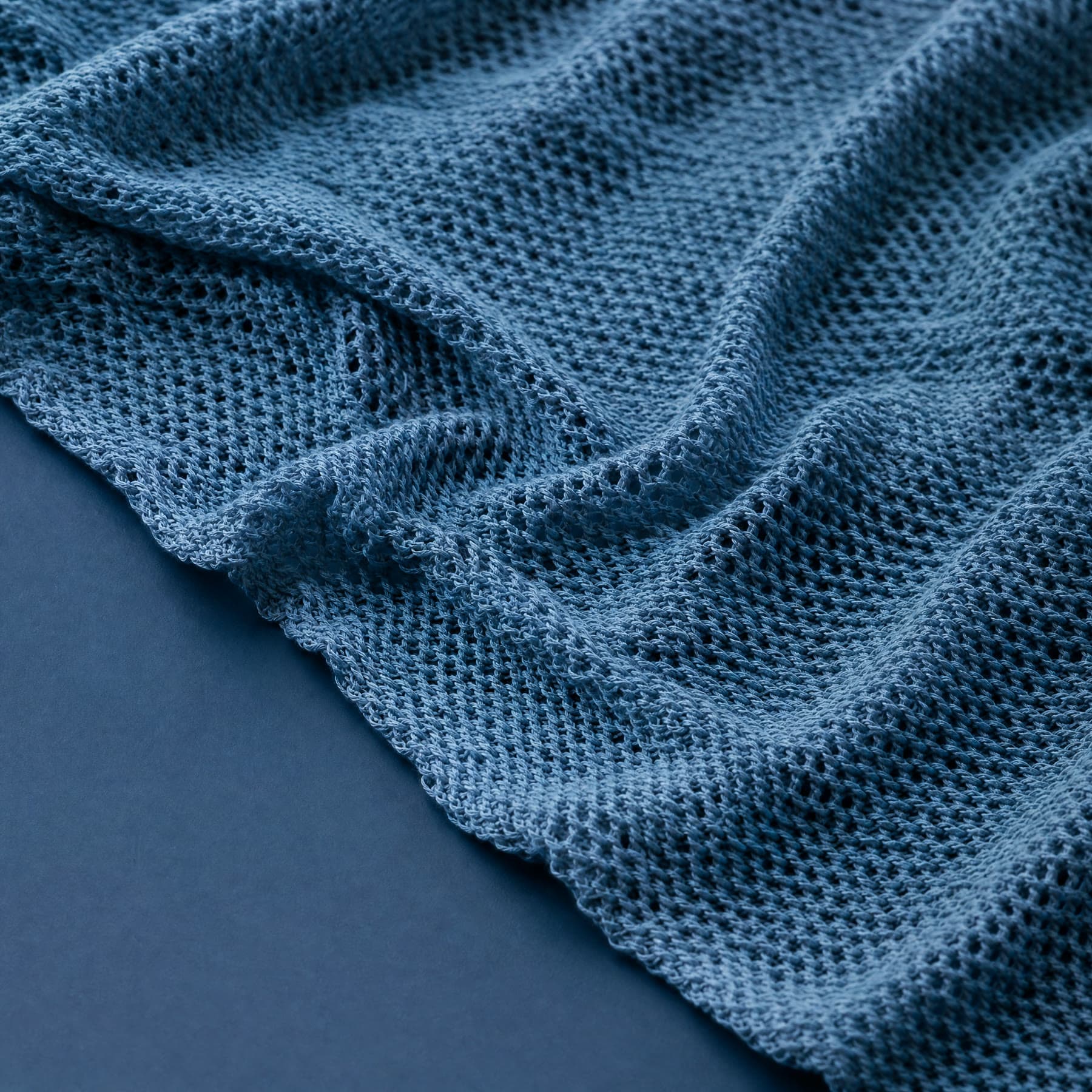
One sentence is enough. "Pale yellow one-piece, single layer, feels quite thin." If you cannot tell whether it is lined, say that — not knowing is itself information.
STEP 03
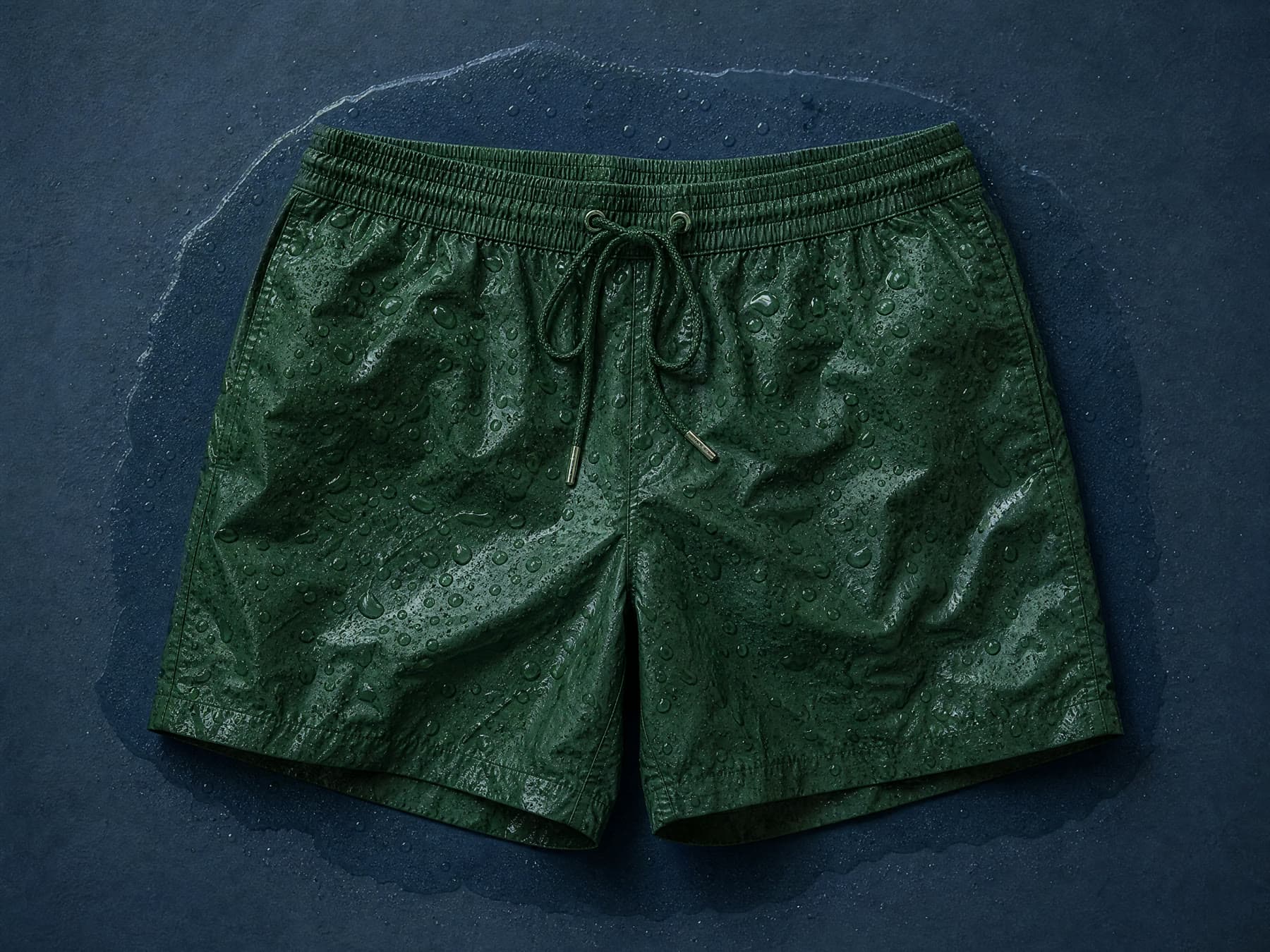
A dry/wet pair, the zones most likely to go sheer, and everything we could not see. On a paid plan, the recovery footage as well — the part that answers how long it lasts.
03 — The reading
A comparison is only useful while both halves are in front of you. The dry reading is fixed on the left; the wet stages move past it on the right.
Colour shift. Two to three steps darker and noticeably more saturated. Pale yellows of this kind read almost ochre while soaked.
Lining read. No second layer visible at the folded edge. The front panel appears to be a single thickness throughout.
MINUTE 00
The worst moment, and the only one most people picture. The knit is saturated, the loops are full, and light passes through wherever the fabric is stretched thin and single-layered.
MINUTE 02
Water sitting on the surface runs off within a minute or two. The gloss goes before the opacity comes back — which is why a garment can look drier than it reads.
MINUTE 10
As the fibres release water they recover their relaxed diameter and the gaps between loops narrow. Most of the change you will notice happens across this stretch.
MINUTE 30
Not identical — a garment that has been in salt or chlorinated water reads slightly differently until it has been rinsed and properly dried. But close.
04 — How the zones are marked
A level is carried by a fill pattern, a stroke weight and a numeral at the same time. Remove every colour from this page and the levels stay apart.
LEVEL 1 · DOTS FILL · 1PX RULE
Behaves close to the rest of the garment when wet.
LEVEL 2 · DIAGONAL FILL · 1.5PX RULE
Thins under stretch; light passes more readily here than elsewhere.
LEVEL 3 · CROSS FILL · 2PX RULE
Single layer under the most stretch. This is where fabric like this usually changes most.
Zones name parts of the garment — a panel, a seam, a strap. They never name a part of a body, and this service gives no advice about one.
05 — Recovery, as it happens
Opacity comes back continuously, and the thing worth knowing is the shape of that return. Every clip is a garment on its own, drying. No soundtrack, and nothing else in frame.
MINUTE SCALES AND PART NAMES ARE DRAWN BY THIS PAGE, NEVER BY THE MODEL
06 — Before you decide whether this is worth paying for
This list is part of every reading. It is never hidden behind the paywall and never covered by a watermark, because it is the part that decides how much weight the rest deserves.
We can tell you what usually happens with fabric like this. We cannot tell you what will happen with yours. If it matters, test it at home first.
Wet a corner of the garment at home — the hem or an inside edge — and hold it up against a window. What you see there is closer to the truth about this specific garment than anything we can produce from a photograph.
07 — Plans
Every price is shown TTC, all taxes included, in US dollars. Plans renew automatically for the period you choose and can be cancelled at any time from your billing page, in as few steps as it took to start.
$0PER MONTH TTC · 50 CREDITS / MONTH · NO CARD REQUIRED
Enough to read one garment properly: the dry/wet pair, the risk zones and everything we cannot know about it.
MOST PEOPLE START HERE
$10PER MONTH TTC · 430 CREDITS / MONTH · $96 / YEAR TTC
For the decision itself: how sheer it goes at minute zero, and how long it stays that way.
$30PER MONTH TTC · 1650 CREDITS / MONTH · $288 / YEAR TTC
For someone reading many garments — a buyer, a maker, a household that keeps a record.
What a credit buys
Where the paywall sits
The free plan gives you the dry/wet pair and the risk zones, watermarked. What it does not give you is the recovery — how long the worst moment lasts. That is what a paid plan is for.
The watermark never covers a risk zone, the list of what we cannot know, or the self-test method. Those are the parts that matter most, and a paywall has no business standing in front of them.
08 — Questions, including the awkward ones
No. We cannot, and we will not say otherwise anywhere on this site.
What we produce is how fabric of the description you gave us usually behaves once it is soaked. We have not touched your garment. We do not know its actual weight in grams per square metre, how many layers its lining really has, how far it stretches on you, or the water and light it will be seen in. Any of those can move the result.
If the answer matters to you, test it yourself before you need it: wet a corner — a hem, an inside edge — and hold it up against a window. Five seconds of that tells you more about your garment than anything we can produce from a photograph.
No. There is no facility to do so. This is not a filter that rejects such photographs after they arrive — the upload path for them does not exist in the product.
The tool accepts one kind of image: a garment laid flat, photographed from above, with nobody in it. Everything we produce is likewise a garment laid flat. We do not generate, display or store any human image, and the terms of use prohibit attempting to make us.
The reason is simple. A service that put swimwear and bodies in the same frame would carry risks we are not willing to hold. The most reliable protection against that is for the feature not to exist.
It is used to produce your reading and nothing else. It is never used to train a model — not ours, not anybody's.
Flat-lay photographs are kept for 30 days so you can return to a reading, then deleted. You can delete one yourself at any time from the tool, and deletion is immediate and permanent.
The full detail — categories of data, legal basis, retention, transfers, your rights, and your right to complain to the CNIL — is set out in the privacy policy.
Every opacity figure we show is a range, never a single number, because a single number would read as a measurement of your garment. It is not one.
Alongside every reading we publish what we could not see. That list is not a disclaimer bolted on at the end; it is part of the output, and it is never hidden behind the paywall or covered by a watermark.
This is a decision aid. It is not a fabric test, and it is not advice of any professional kind.
No. We do not do that at all.
We describe the physical behaviour of a textile when it is wet: how much light it lets through, how much its colour shifts, where it thins. We say nothing about how a garment looks on a body, and we make no recommendation based on anyone's shape or size.
You can cancel at any time from your billing page. Cancelling takes as few clicks as subscribing did, and your plan runs to the end of the period you have already paid for.
You have a statutory 14-day right of withdrawal. Because this is a digital service, that right ends early only if you have expressly asked us to start straight away and expressly waived it — two separate boxes at checkout, neither of them pre-ticked. If you did not tick both, the 14 days stand in full.
The withdrawal page carries the statutory form and the full conditions.
Each plan carries a monthly allowance of service credits. A chat costs 1, reading a fabric from a photograph costs 2, a dry/wet pair with its risk map costs 5, and recovery footage costs 50.
Credits are an allowance for using this service. They are not money, not stored value, cannot be exchanged for cash and cannot be transferred.
There are no credit packs and no top-ups. Unused credits do not carry into the next period. If you run out, you either wait for the period to roll over or move up a plan.
Yes. This service is for adults. You confirm you are an adult when you create an account, and the terms of use say the same.
Children's swimwear can be read like any other garment — a parent wanting to know whether a pale swimsuit goes sheer is asking a perfectly ordinary question. What does not change under any circumstances is that no human figure is ever produced.
Garments only. No bodies, no models, no photos of you — ever.


